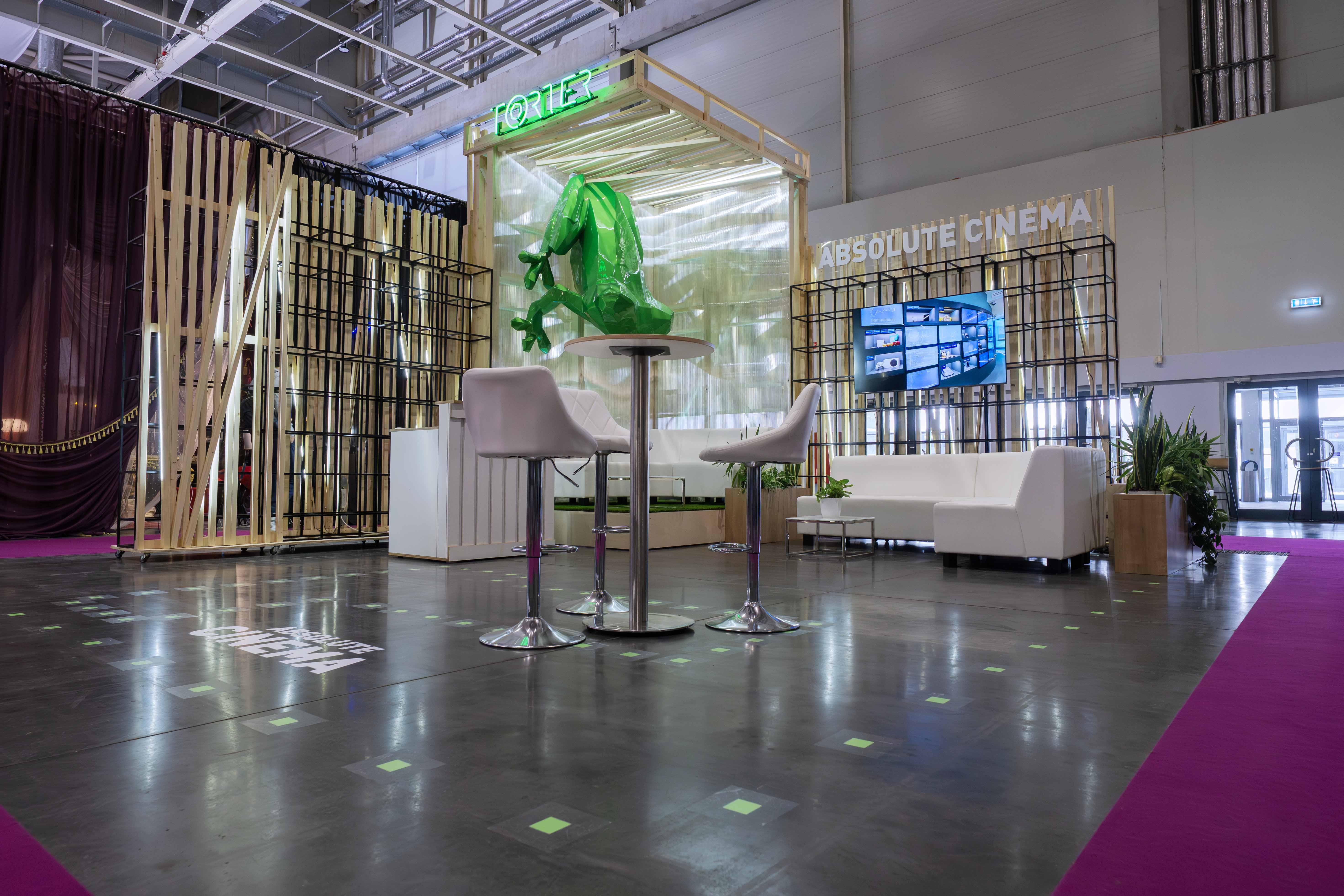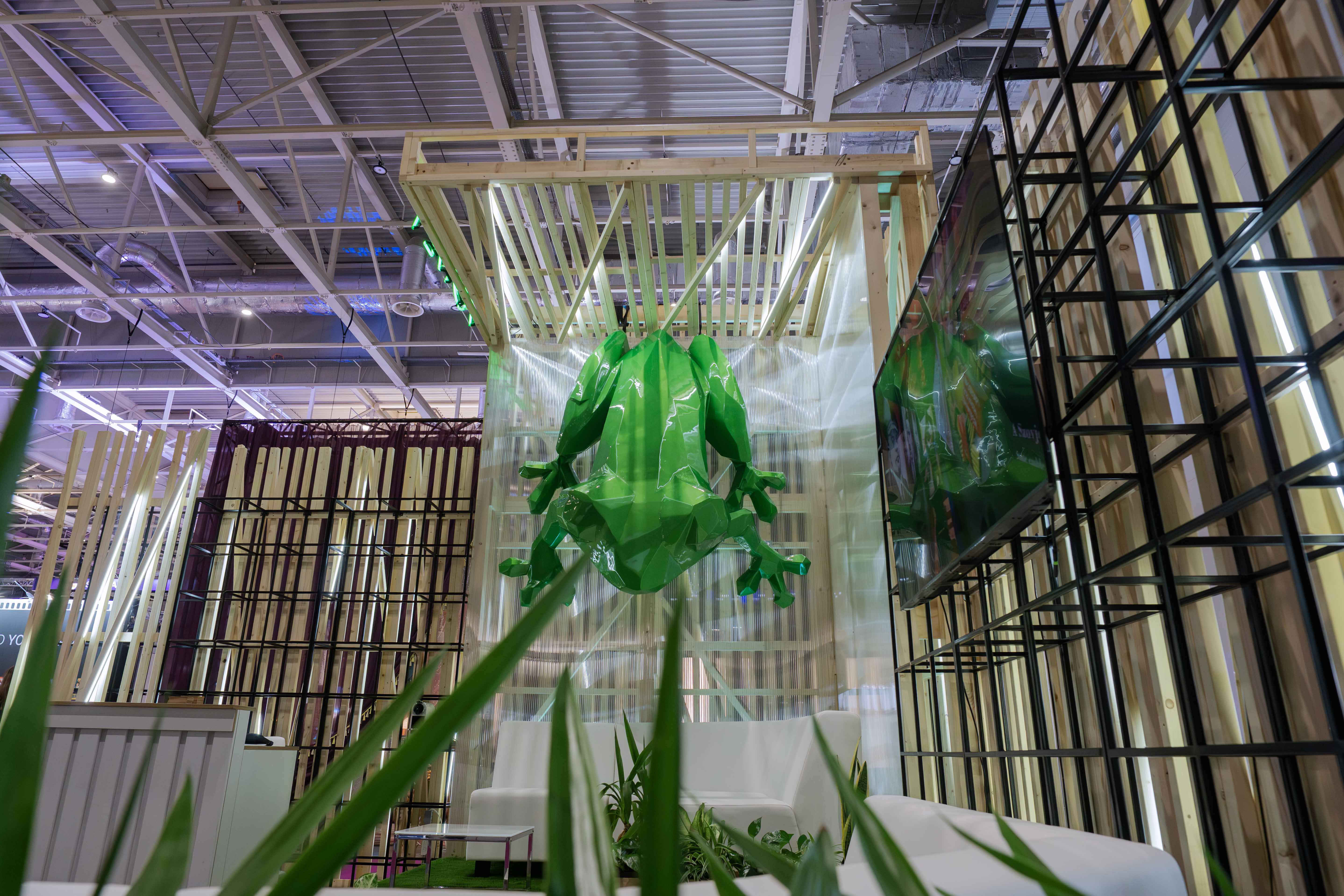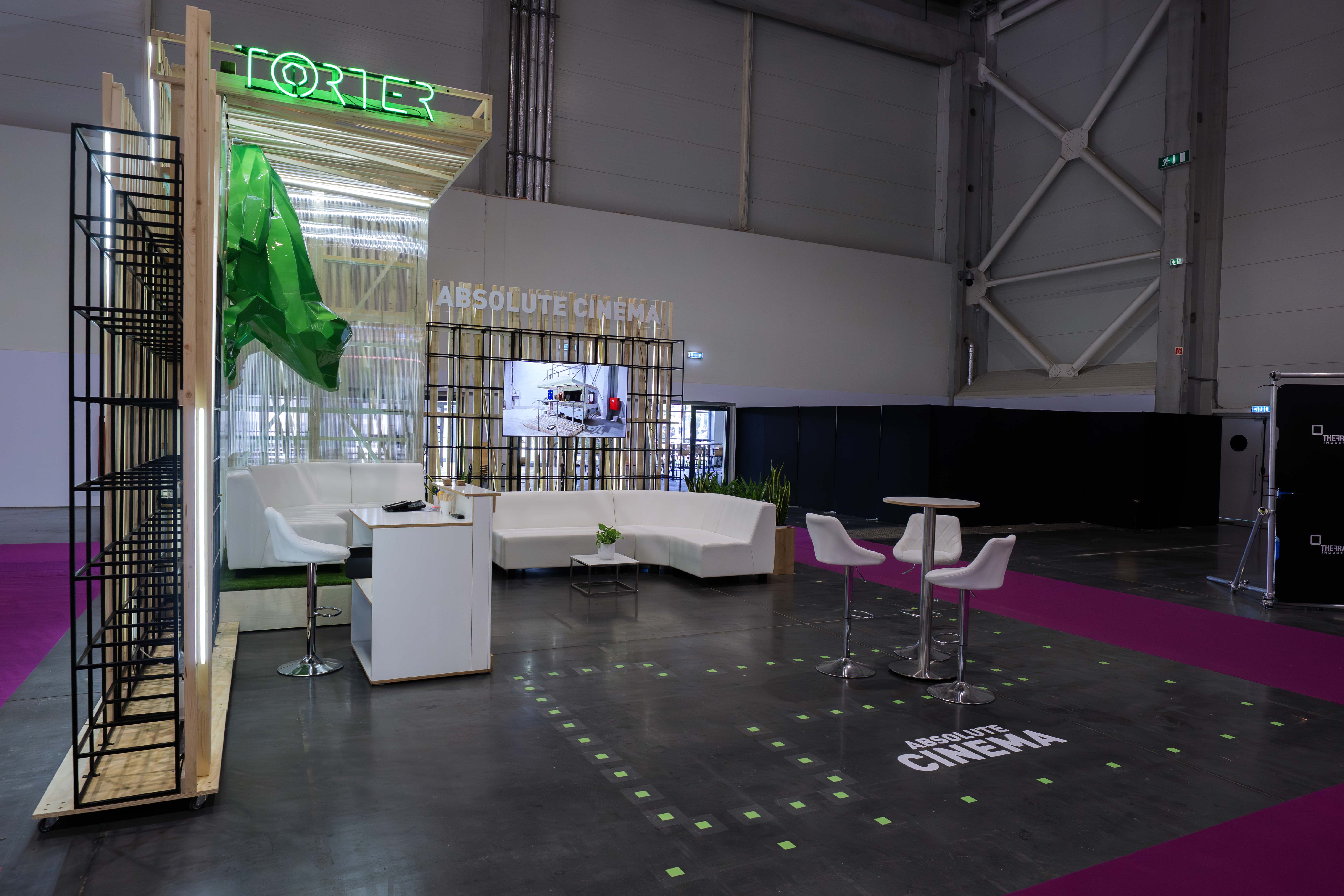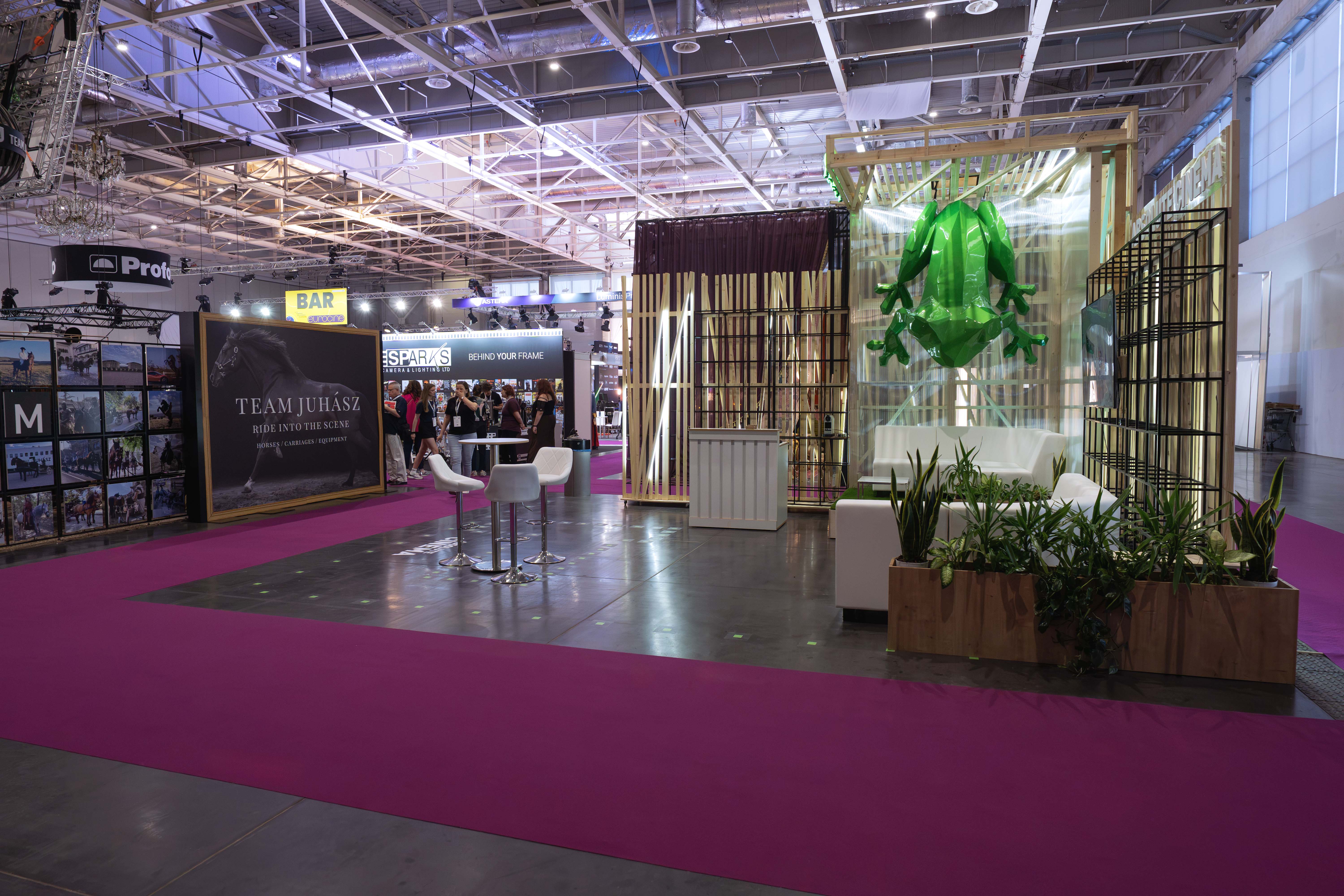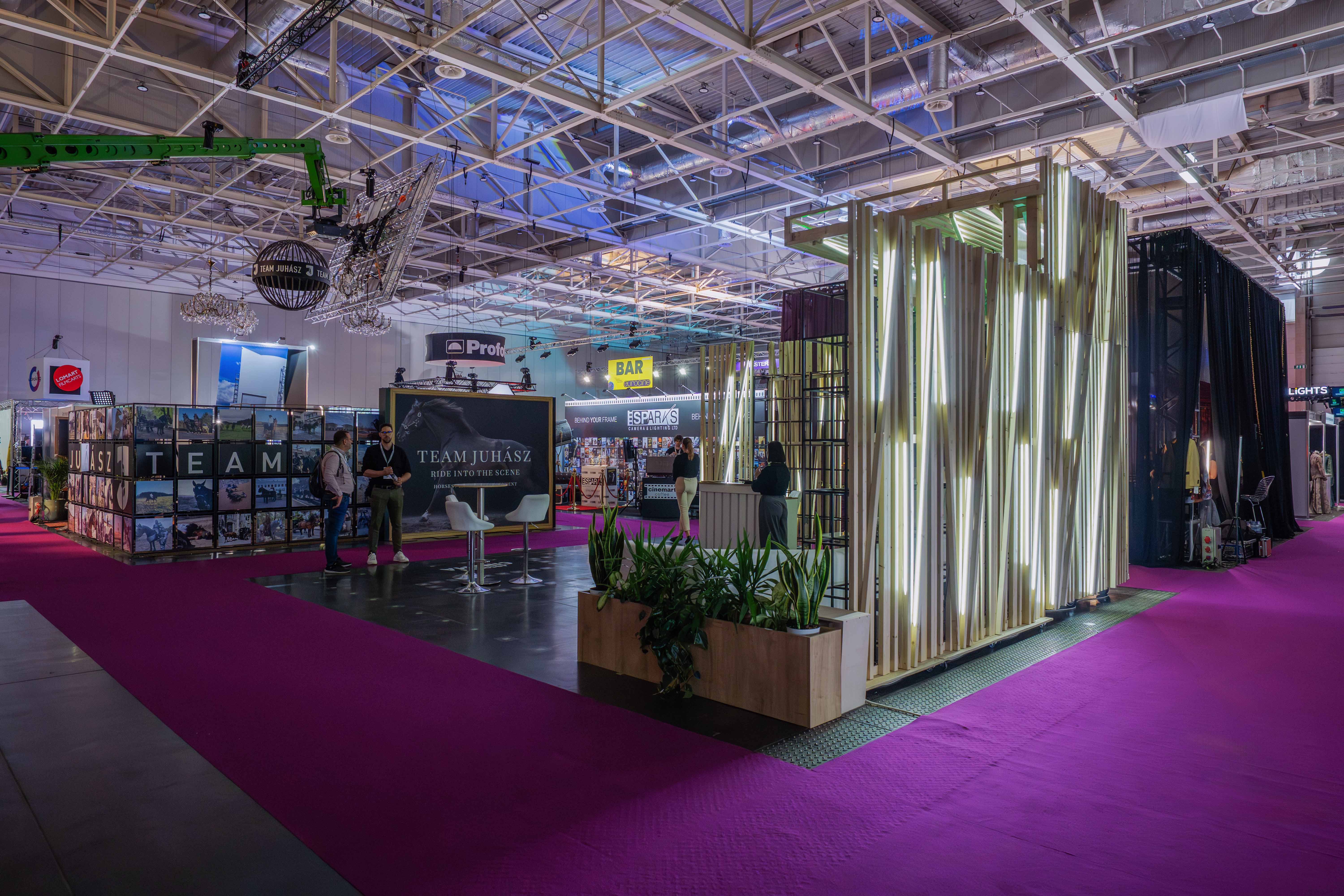
The concept of the stand was inspired by one of filmmaking's core traits — continuous change and adaptation. The goal was to create a space that doesn't function as a static installation, but is itself capable of transforming, responding, and taking on new configurations, much like a film production is always in motion.
The stand's side walls were built from elements mounted on wheels, allowing the space to be adapted to different situations and needs. This flexible layout is not only a functional solution, but also a spatial expression of the dynamics of film production workflows, just as the stand's overall appearance is.
The flooring was deliberately understated: instead of covering the entire surface, only a few green square stickers mark the rhythm of the space. This minimal intervention emphasizes the freedom of the movable wall structures.
Sustainability was a defining aspect of the project. The rolling wall structures were built from reclaimed wooden slats, given a new life within the stand. The modular frame system was designed to remain usable after the event for building other stands, installations, or set pieces, significantly reducing the amount of waste generated.
Environmental awareness is a key part of our design philosophy: we create spaces that not only work visually and functionally, but also reflect responsible design thinking in their material use and full life cycle.
Sustainability extended beyond the structural elements to the furnishing as well: no new furniture was manufactured for the stand — everything came exclusively from TorTer's existing furniture rental catalog. In the corners designed for conversation and coffee, guests found a white sofa, a rhombus white bar stool, and a wooden round counter. This approach further reduced the project's material and resource use, while the stand's appearance remained premium and consistent with the brand's identity.
The project demonstrates TorTer's capabilities in both exhibition execution and visual design, and shows that sustainable design and premium presentation are not mutually exclusive. The full reference can be viewed on the references page.